The fact that you are reading this means that you, like me, were born into the only 100-odd years in human history where people will have driven cars in cities. Cities have existed for thousands of years, and until very recently they were almost entirely built around people walking. In the future, cities will return to this paradigm, for the millennia to come.
One hundred years from now, people will look back at the amount of space we’ve allotted for car travel and find it puzzling, if not hilarious. They will see photographs of crowded freeways and barren parking lots and apartments that look as if they are eating cars as food. They will ask “is it true that you brought five chairs along with you to the grocery store? Did grandma really have to drive herself, even in the rain? Why was it normal to have cars drive so fast, so close to you? What happened if somebody made a mistake?” Probably, not many of us will get to laugh along with such questions. Instead, we can only recognize that the experiment of cars in cities has been successful, in that it has yielded a clear, consistent result. This result is best summed up by Enrique Peñalosa, the former Mayor of Bogotá:
At this point in time, most citizens of cities built around cars are all too aware of the problems they cause. Cars are dangerous. In Los Angeles, where I live, about one person a day is killed in a car accident, and half of time, the victim was on foot2. Cars require tremendous space for operation and storage. Building city streets around cars and building around people require designing at two fundamentally different scales. Cars also contribute significantly to harmful pollutants in the air, leading to increased health problems, such as asthma, cardiovascular disease, and premature death3.
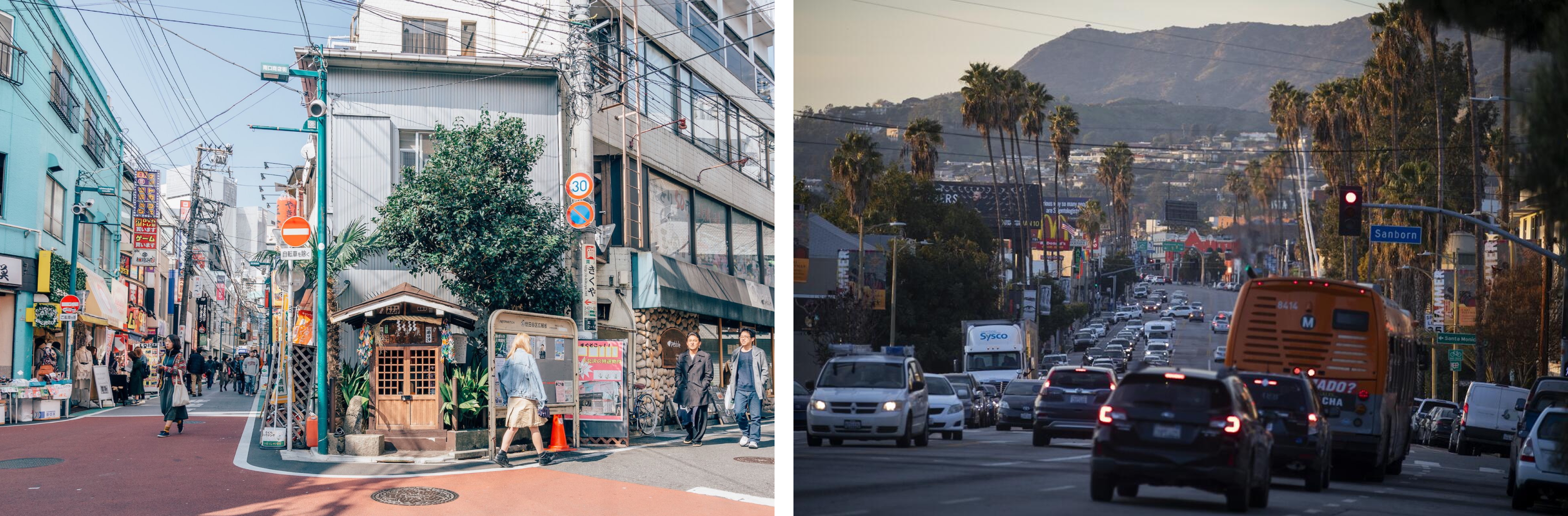
And, of course, cars create traffic. In 2024, commuters in the Los Angeles metropolitan area collectively spent over 1 billion hours delayed by traffic4. Yes, 1 billion. This equates to more than 100,000 years of human potential lost to traffic each year in Los Angeles alone. 100,000 years that could have been better spent taking a nap, playing with your kids, or learning an instrument. And still, this number increases year after year. In the words of Jean-Louis Missika, Paris’s Deputy Mayor of Urbanization:
As the experiment of cars has reached a conclusion, we can only choose whether or not to ignore the results. Understanding this, many cities have begun dismantling the vestiges of their car-centric experiments: San Francisco tore down its Embarcadero Freeway6 and New York pedestrianized Times Square7. Seoul demolished a freeway that had been built over the Cheonggyecheon river in its downtown area and reopened the river as a public park8, which perplexingly led to a reduction in traffic9.
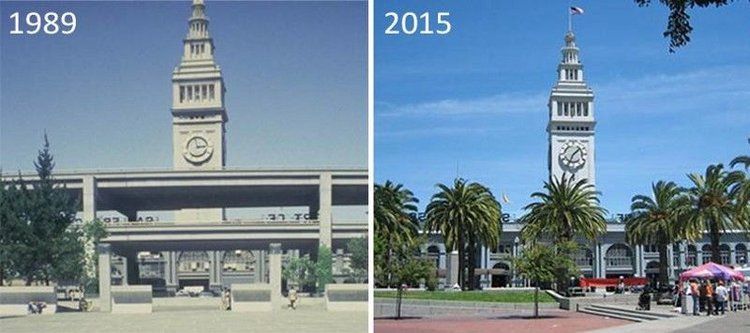
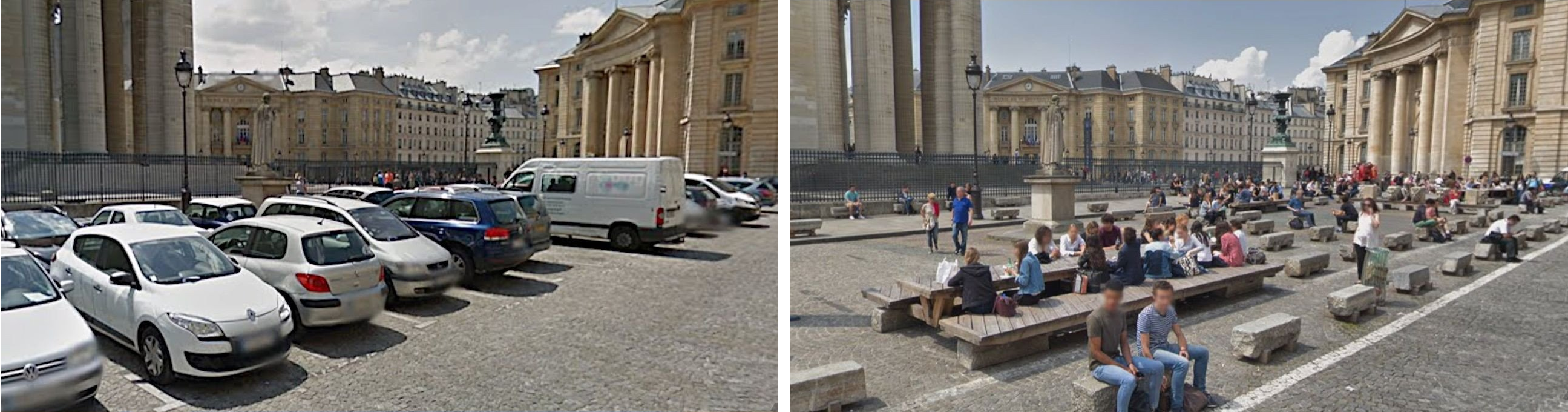
Below: the seating in front of the Pantheon after the removal of several parking spaces.
Source: Pinterest / Twitter: @EmmanuelSPV
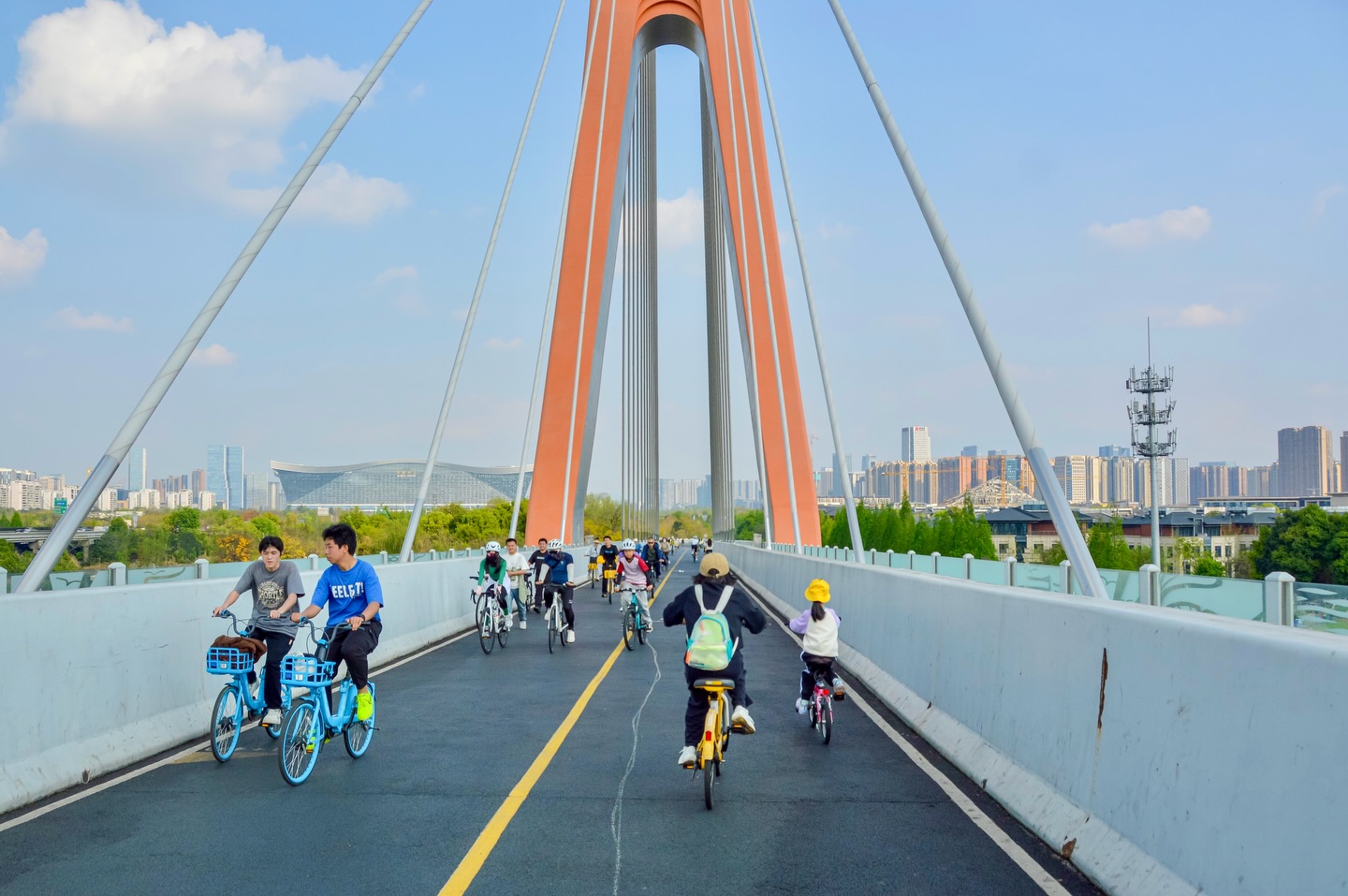
But undoing what didn’t work is only the beginning. Across the globe, cities have been experimenting with new, radical transformations. Paris has implemented slow traffic zones in more than half of its streets10, and last year committed to becoming a “100% bikeable city”11. Chengdu encircled its entire city with a 100-kilometer bike highway12. Bogotá closes over 120 kilometers of streets to car traffic every Sunday13. And each summer, Montreal pedestrianizes its main street, Mont-Royal Avenue14. The contemporary search for post-car urban solutions is an exciting, collective, global endeavor.
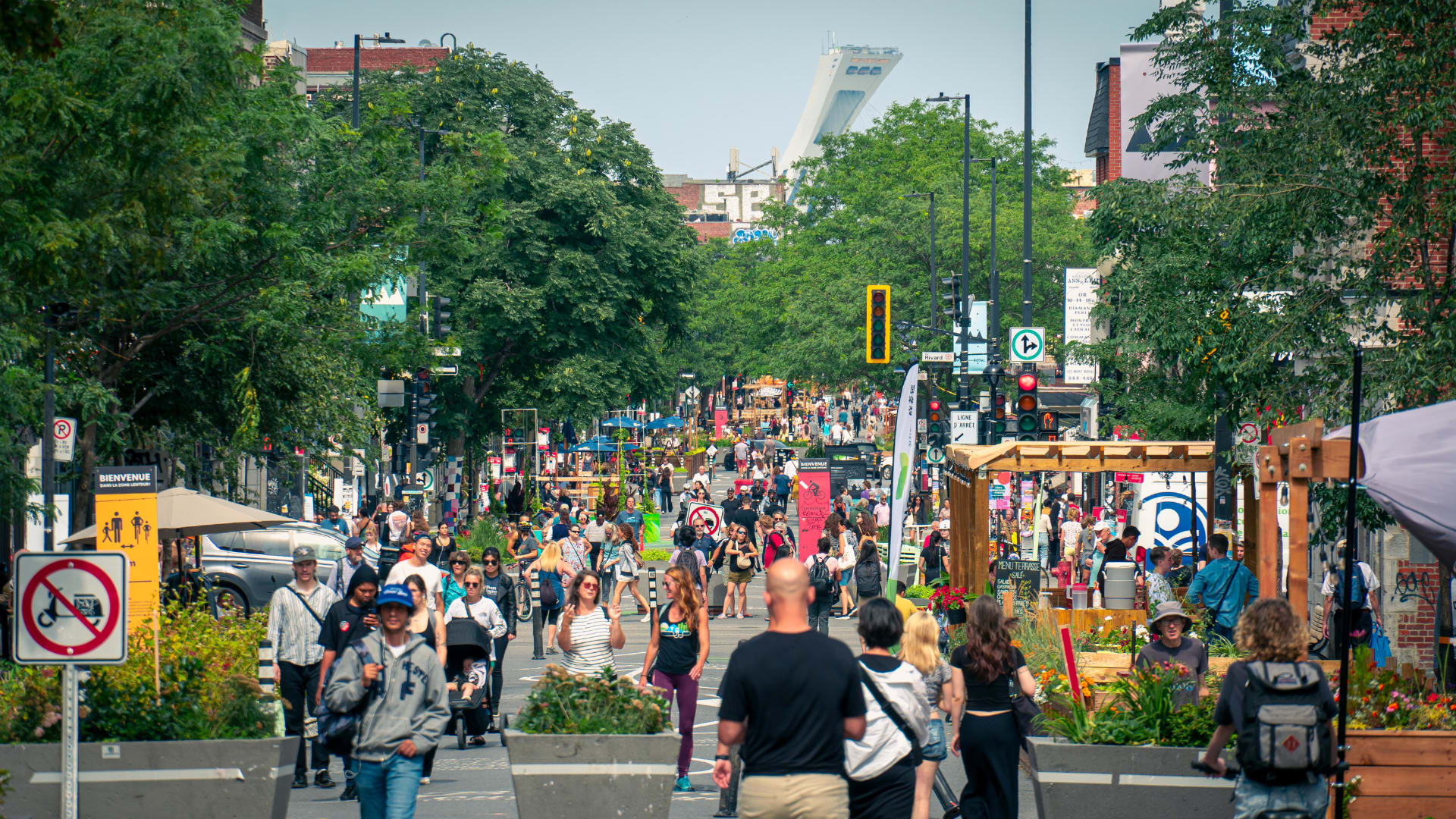
And yet, some cities, like Los Angeles, are far behind. When systems become sufficiently normalized, it’s easy to lose the ability to imagine alternatives. Perhaps this lack of imagination is why LA has decided to invest $900M in widening freeway lanes next year15, creating future technical debt16, even when it has been shown that this does nothing to alleviate traffic17, 18. Los Angeles’s resistance to meaningful, coordinated change has resulted in Angelenos experiencing the highest traffic delays19 and the most traffic deaths20 of any city in America. The irony is that this resistance to change is rooted in fears of making traffic worse.
Fortunately, the incompatibility of cars and cities is an observation, not a preference. It was not “decided on” as much as it was discovered. And as such, the transition away from cars can only be delayed, not reversed. The question then becomes one of endurance. How much longer will Angelenos put up with rush hours, parking tickets, unprotected left turns, and aggressive drivers? So far, the answer seems to be a lot. But as the beauty and quality of life seen in human-scaled cities becomes more and more obvious, it will become increasingly difficult to deny Los Angeles’s need to radically reimagine the city.
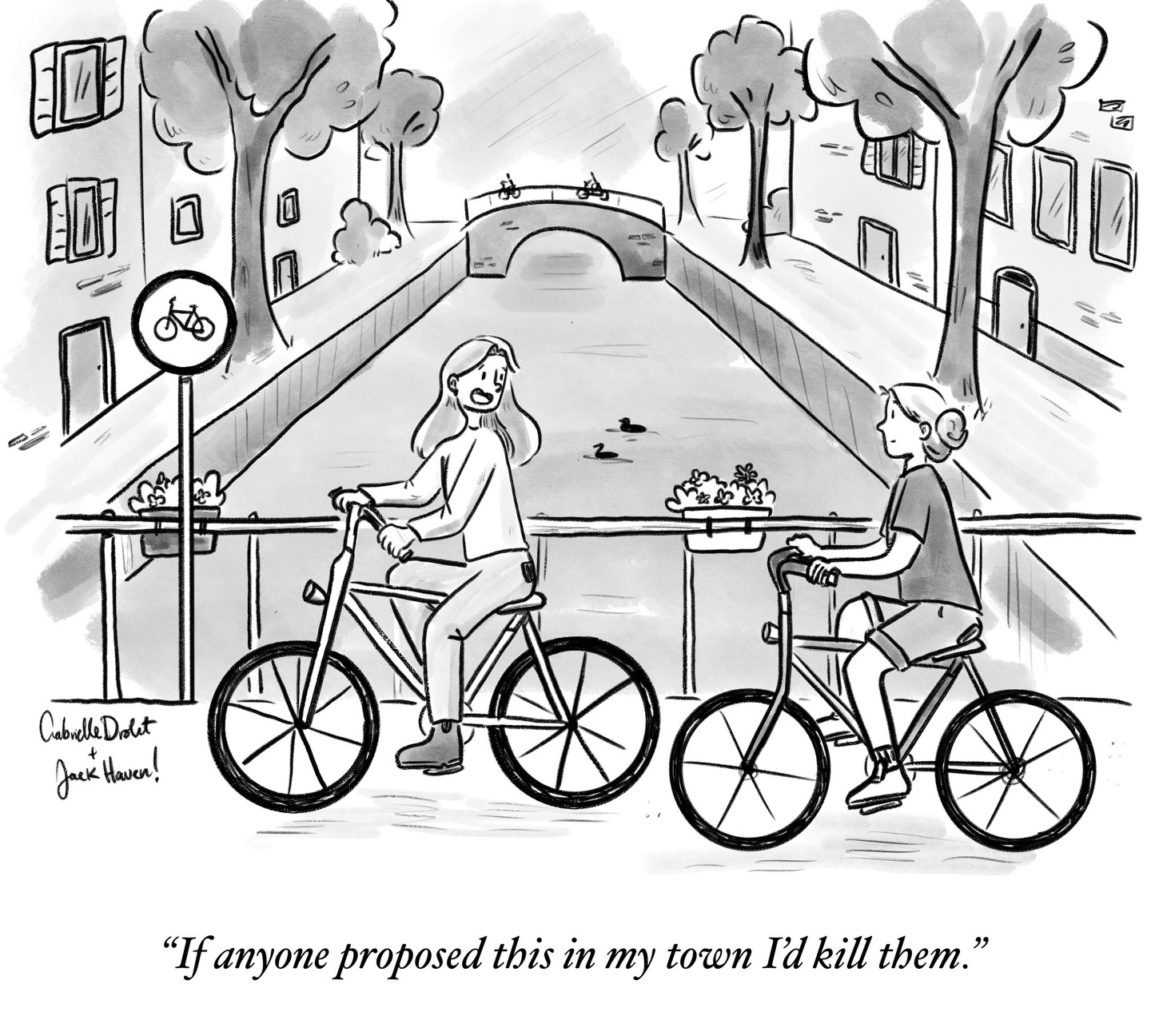
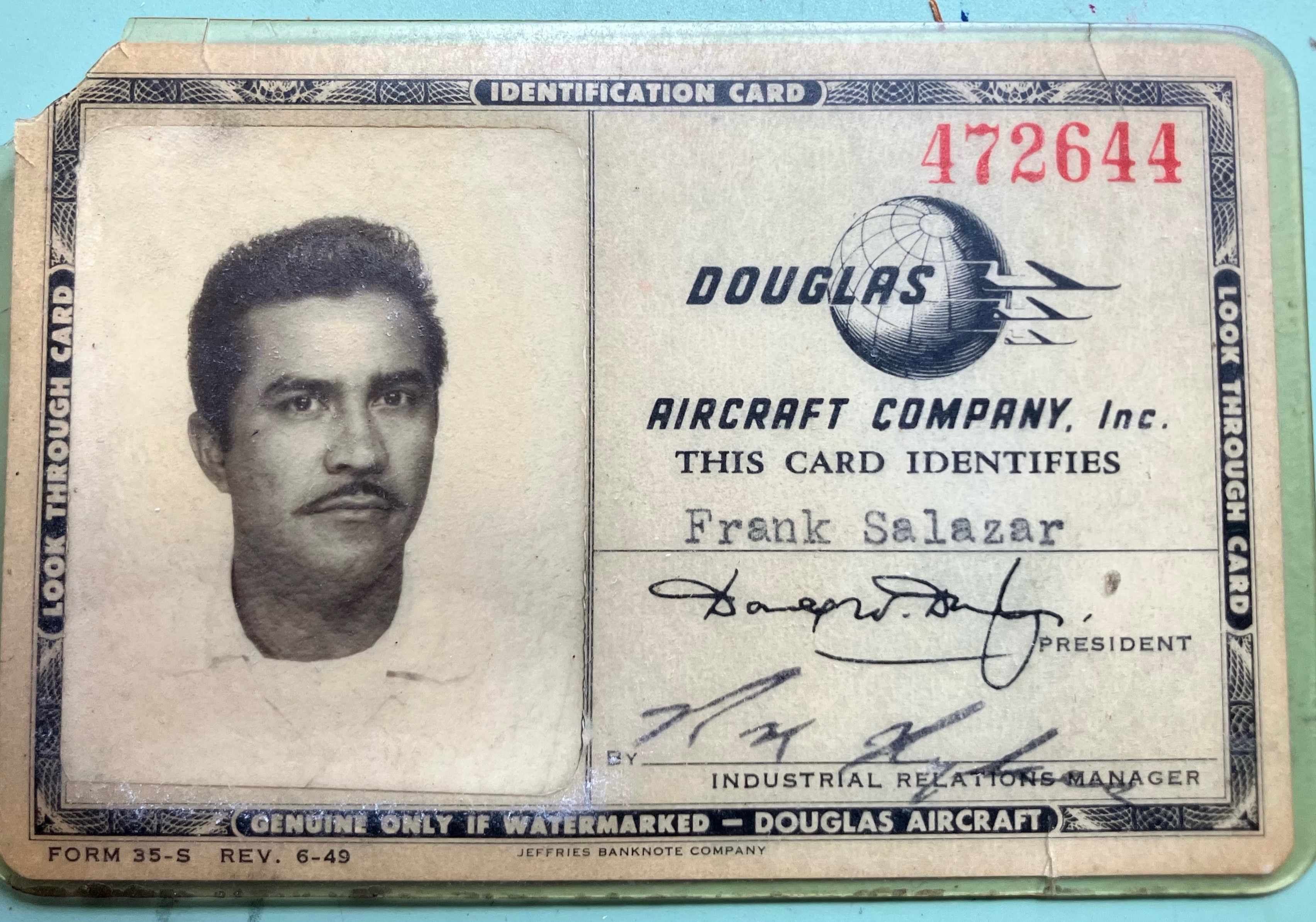
But perhaps, such a radical reimagining is not entirely necessary. Los Angeles began as a transit-oriented city, and once had the largest electric railway system in the world21. The blueprints for a better city are already here, buried under the streets we’ve built for cars, literally. 70 years ago, my grandfather lived in Downtown LA and took public transportation to his job in Santa Monica. We need only to imagine a future where our grandkids navigate the city in this same way.
Sources
https://www.latimes.com/opinion/story/2024-01-25/los-angeles-traffic-deaths-pedestrian-safety
United States Environmental Protection Agency. Near Roadway Air Pollution and Health: Frequently Asked Questions. 2014, https://www.epa.gov/sites/default/files/2015-11/documents/420f14044_0.pdf
Texas A&M Transportation Institute. Urban Mobility Report 2025. 2025, https://mobility.tamu.edu/umr/report
https://www.ft.com/content/882ebf59-d14a-4d4c-beb7-af72df31a4f3
https://www.huffpost.com/entry/reflections-on-the-loma-p_b_324350
https://www.paris.fr/en/pages/a-new-cycling-plan-for-a-100-bikeable-city-28350
https://www.mtl.org/en/experience/stepping-montreal-pedestrian-only-streets
Duranton, Gilles, and Matthew A. Turner. “The Fundamental Law of Road Congestion: Evidence from US Cities.” American Economic Review, vol. 101, no. 6, Oct. 2011, pp. 2616–52. DOI.org (Crossref), https://doi.org/10.1257/aer.101.6.2616.
Texas A&M Transportation Institute. Urban Mobility Report 2025. 2025, https://mobility.tamu.edu/umr/
National Center for Statistics and Analysis. Traffic Safety Facts 2023: A Compilation of Motor Vehicle Traffic Crash Data. National Highway Traffic Safety Administration, Aug. 2025, https://crashstats.nhtsa.dot.gov/Api/Public/ViewPublication/813738